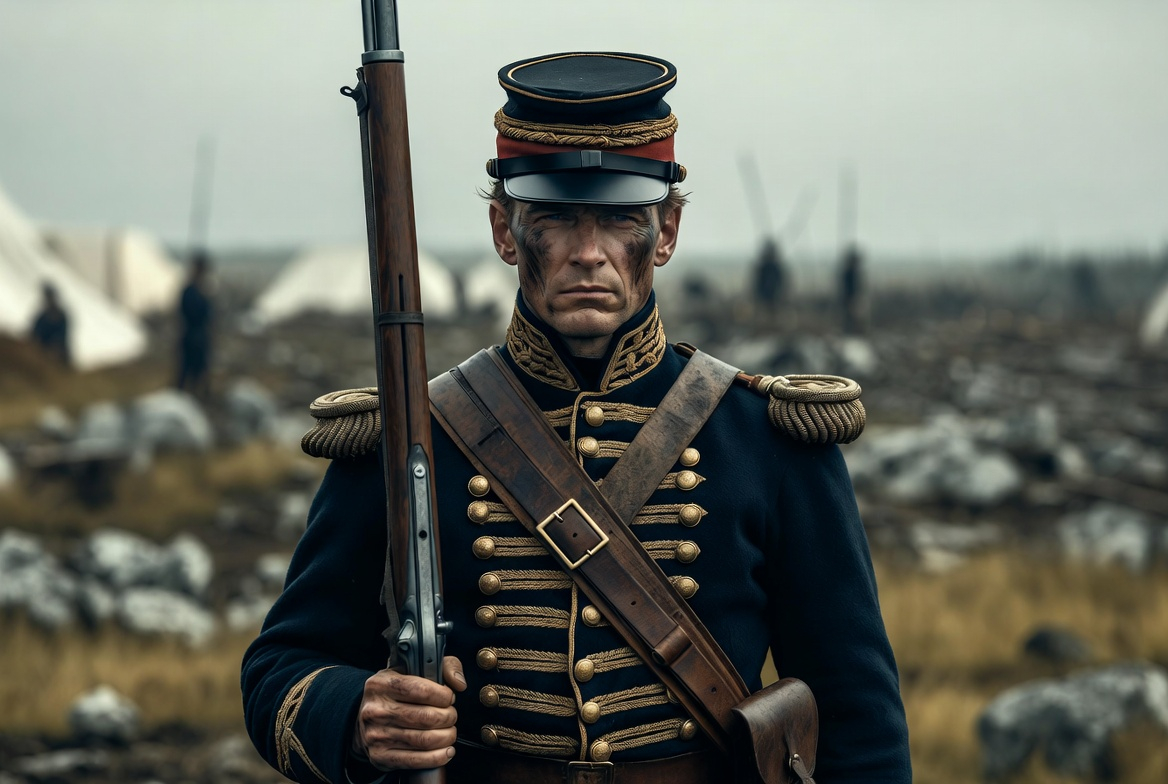
現代のビジネスマンが毎日何気なく羽織っているスーツのルーツを辿ると、
そこには優雅なサロンの風景ではなく、硝煙が立ち込める戦場と、
命を懸けて戦った兵士たちの姿が存在します。スーツの歴史を紐解くことは、
そのまま軍服の進化の歴史を辿ることと同義なのです。
まず、私たちが「ジャケット」と呼んでいる服の基本的な構造自体が、
かつての軍服の機能性を追求した結果であることを理解しなければなりません。
例えば、スーツの「ラペル(襟)」ですが、これは18世紀の軍服の立襟を、
戦いの合間の休息時間に暑さを凌ぐためにボタンを外して寝かせたことが始まりです。
この「襟を折る」という行為が、後にデザインとして様式化され、
現代のノッチドラペルやピークドラペルへと繋がっていきました。
また、袖口に並ぶボタンも、ナポレオンが兵士たちに「袖で鼻水を拭かせないように」と
硬いボタンを付けさせたという有名なエピソードに象徴されるように、
規律と美観を維持するための軍事的な知恵でした。
さらに、ジャケットの背中にある「ベント」は、
馬に乗る際に上着の裾が邪魔にならないよう計算された騎兵隊の工夫です。
センターベントは中央から、サイドベンツは腰に下げたサーベルを抜きやすくするために
両脇から切り込みが入れられました。肩パッドの存在も、重い銃や装備品を担ぐための補強や、
軍人らしい堂々とした体格を強調するためのエポレット(肩章)の名残です。
このように、スーツの細部には「戦うための合理性」が凝縮されています。ネクタイさえも、
17世紀のクロアチア傭兵が首に巻いていた魔除けの布が起源であり、
軍隊の結束を示すアイデンティティの一部でした。私たちがスーツを着たときに背筋が伸びる思いがするのは、
この服が持つ「規律」と「勇気」のDNAが、
100年以上の時を超えて現代のビジネスシーンにも息づいているからです。
軍服が究極の機能美を求めて進化し、それが市民社会に伝播して洗練された結果、
現代のスーツという完成形に至ったのです。この歴史を知ることは、単におしゃれを楽しむだけでなく、
プロフェッショナルとしての「覚悟」を身に纏うことに他なりません。
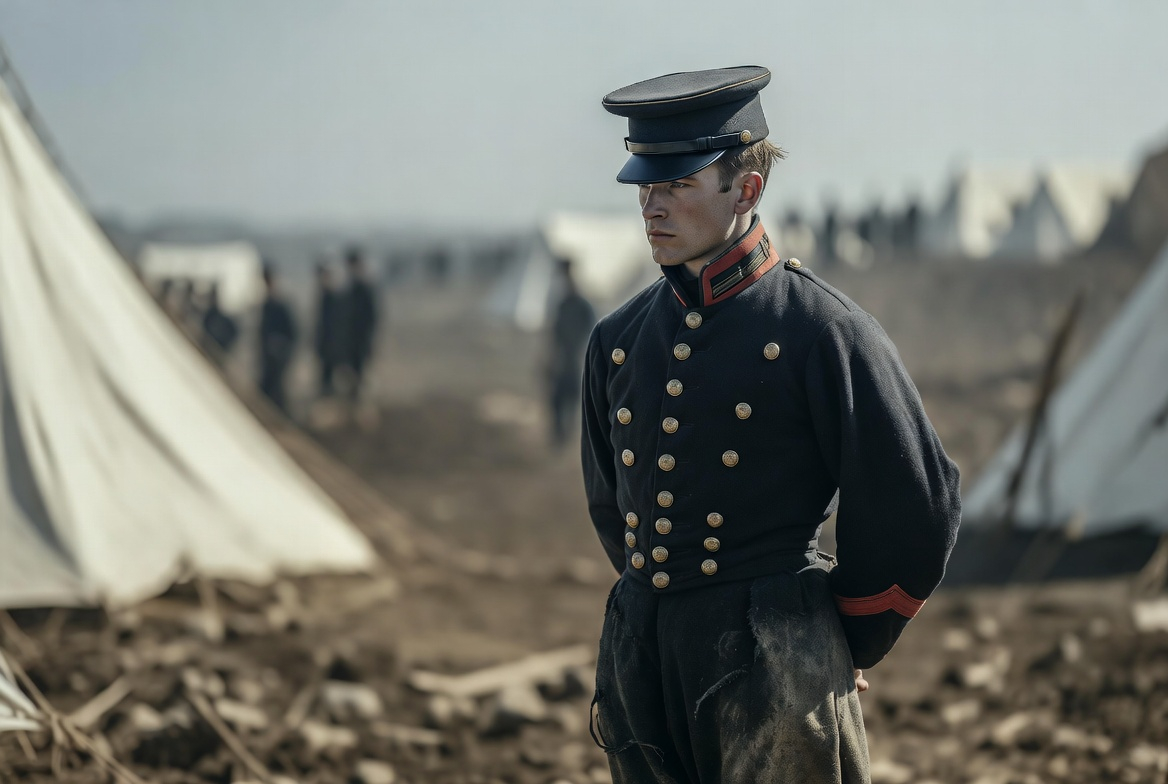
현대의 비즈니스맨이 매일 아무렇지 않게 걸치는 양복의 기원을 따라가 보면,
그곳에는 우아한 사교장의 풍경이 아니라, 화약 냄새가 자욱한 전장과
목숨을 걸고 싸웠던 병사들의 모습이 존재합니다.
양복의 역사를 풀어본다는 것은 곧 군복의 진화를 따라가는 것과 같은 의미입니다.
우리가 ‘재킷’이라고 부르는 옷의 기본 구조 자체가
과거 군복의 기능성을 추구한 결과라는 점을 먼저 이해해야 합니다.
예를 들어, 양복의 **라펠(깃)**은 18세기 군복의 선다(立ち襟)에서 비롯되었습니다.
병사들이 전투 사이의 휴식 시간에 더위를 피하려고
단추를 풀어 깃을 눕힌 것이 그 시작이었죠.
이 “깃을 접는다”는 행위가 이후 디자인으로 정착되며
현대의 노치드 라펠과 피크드 라펠로 이어졌습니다.
또한 소매 끝에 줄지어 달린 버튼 역시,
나폴레옹이 병사들이 소매로 코를 닦지 못하도록
단단한 버튼을 달게 했다는 유명한 일화처럼
규율과 단정함을 유지하기 위한 군사적 지혜에서 비롯되었습니다.
재킷 등 뒤의 벤트(트임) 또한 마찬가지입니다.
기병대가 말을 탈 때 상의 자락이 방해되지 않도록 계산된 구조였죠.
센터 벤트는 중앙에서, 사이드 벤트는 허리에 찬 사브르(군용 검)를
쉽게 뽑을 수 있도록 양옆에 트임을 넣은 데서 유래했습니다.
어깨 패드 역시 무거운 총기와 장비를 견디기 위한 보강이자,
군인의 당당한 체격을 강조하던 에폴레트(견장)의 흔적입니다.
이처럼 양복의 세부 요소에는 **‘전투를 위한 합리성’**이 응축되어 있습니다.
심지어 넥타이조차 17세기 크로아티아 용병들이
부적처럼 목에 두르던 천에서 시작되었으며,
군대의 결속을 상징하는 정체성의 일부였습니다.
우리가 양복을 입으면 자연스레 자세가 바로 서는 듯한 느낌을 받는 이유는,
이 옷이 지닌 ‘규율’과 ‘용기’의 DNA가
100년이 넘는 시간을 넘어 현대 비즈니스 현장에도 살아 있기 때문입니다.
군복이 궁극의 기능미를 추구하며 진화했고,
그 정신이 시민 사회로 전파되어 세련되게 다듬어진 결과가
오늘날의 양복이라는 완성형입니다.
이 역사를 아는 것은 단순히 멋을 즐기는 차원을 넘어,
프로페셔널로서의 ‘각오’를 몸에 두르는 행위이기도 합니다.
When we trace the origins of the modern business suit that men casually put on every day,
what we find is not the elegant scenery of a salon, but battlefields filled with gunpowder smoke
and the soldiers who risked their lives fighting there.
To unravel the history of the suit is essentially to follow the evolution of military uniforms.
The basic structure of what we now call a “jacket” was originally born from the pursuit of functionality in military attire.
For example, the lapel of a suit traces back to the standing collars of 18th‑century military uniforms.
Soldiers would unbutton and fold down their collars during breaks between battles to cool off.
This simple act of “folding the collar” later became formalized as a design element,
eventually developing into today’s notched and peaked lapels.
The row of buttons on the cuffs also has military roots.
A famous anecdote tells that Napoleon ordered hard buttons to be sewn onto soldiers’ sleeves
so they wouldn’t wipe their noses with them—an idea born from the desire to maintain discipline and appearance.
The vent on the back of a jacket likewise originated from cavalry uniforms.
It was designed so the coat wouldn’t get in the way while riding a horse.
The center vent opened from the middle, while side vents were added to allow soldiers
to draw their sabers more easily from the waist.
Shoulder pads, too, are remnants of epaulettes—reinforcements that helped soldiers carry heavy weapons
and emphasized the imposing physique associated with military men.
In this way, the details of the suit are filled with the rationality of combat design.
Even the necktie began as a strip of cloth worn by 17th‑century Croatian mercenaries as a protective charm,
later becoming a symbol of unity within military ranks.
Perhaps the reason we instinctively straighten our posture when wearing a suit
is because its DNA of discipline and courage has survived more than a century
and still lives on in today’s business world.
Military uniforms evolved in pursuit of ultimate functional beauty,
and as their spirit spread into civilian society and became refined,
the modern suit emerged as its perfected form.
Understanding this history means more than simply enjoying fashion—
it is, in a sense, wearing the resolve of a true professional.
'이야기' 카테고리의 다른 글
| 넷플릭스 해외 오류 해결법 2026|자막 사라짐·지역 제한·VPN 완전 정리 , M7111-5059 오류 해결 (1) | 2026.04.11 |
|---|---|
| 【スーツの歴史】英国発祥のスーツが世界のビジネスマンと結婚式の標準になった理由(韓日の導入時期とレディースファッションの変遷)[양복의 역사] 영국에서 시작된 수트가 전 세계 직장인과 결혼식 예복의 표준이 된 이유 (한일 도입 시기와 여성복의 변화) (0) | 2026.03.13 |
| "100만 원 재환전하면 얼마 떼일까? 신한 쏠트래블 수수료 0.5%의 실체" (0) | 2026.01.23 |
| 국민학교와 초등학교의 차이: 광복 후에도 50년간 이름을 바꾸지 못한 이유 (1) | 2026.01.23 |
| 2026年最新 逆老化サプリ完全ガイド|NMNから世代別戦略まで、時計の針を戻す5つの習慣 (1) | 2026.01.20 |
| [브랜드 인사이드] 나이키(NIKE)의 탄생 비화: 50달러 보따리상에서 시가총액 수백조의 제국이 되기까지 세계를 정복한 '승리의 여신' (1) | 2026.01.19 |
| "살아있는 시체, 좀비의 유래와 영화의 역사: 아이티의 부두교에서 K-좀비까지" (1) | 2026.01.18 |


